How to Document Slot Machine State
A useful machine record connects the exact machine, bet, visible state and rule evidence. Good documentation makes later comparison possible and prevents memory from turning an observation into a claim.
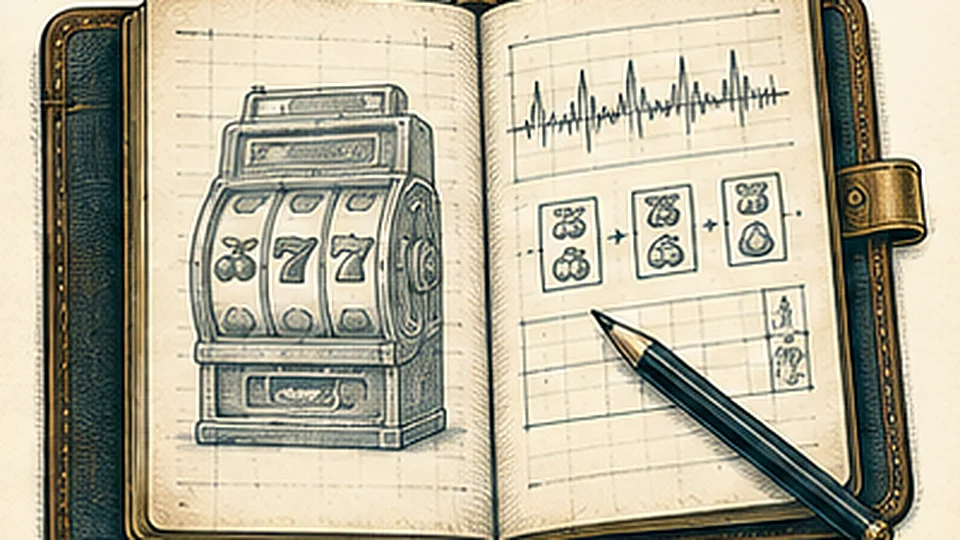
Why documentation matters
Slot advantage-play decisions often depend on small differences: one meter, one reel position, one remaining-spin counter, one bet level, or one reset condition. A casual note such as “machine was high” removes the details needed to evaluate those differences.
Documentation does not prove that a state is profitable. It creates a reliable record of what was visible, what the machine stated, what changed, and what remains unknown.
The five-part machine record
- Identity: exact title, subtitle, manufacturer if verified, machine or program version, casino and date.
- Machine setup: denomination, selected bet, bet level, enabled jackpot or feature options.
- Starting state: every meter, collector, reel position, counter, stored prize and progressive value relevant to the decision.
- Rule evidence: help-screen wording, bet required for the feature, trigger condition, persistence language and reset behavior.
- Change log: what advanced, expired, awarded or reset after each observed event.
Photograph the context, not just the attractive number
Where property rules permit photography, begin with a wide photograph showing the title and complete screen. Then capture the relevant state and rule pages. A cropped image of one meter may be impossible to connect to the correct game, bet or date later.
A strong photo sequence includes the title screen, bet panel, complete state, relevant help page and post-award or post-reset state. Avoid photographing people, player cards, financial information or anything unrelated to the research.
When photographs are not permitted
Use a short structured note. Record values from left to right, copy important rule wording accurately, and add a simple diagram for reel positions or boards. Do not argue with property staff or ignore posted rules to obtain documentation.
Use stable labels
Label each component by position and function: “reel 2 collector,” “blue bag,” “upper-right pot,” or “third wheel.” Stable labels make before-and-after comparisons possible. Descriptions such as “the good one” or “almost full” cannot be audited.
Record settings before touching them
Changing denomination or bet can reveal another state, reset a display, or create confusion about ownership. Capture the original selection first. Then record each tested setting as a separate observation rather than combining them.
Build a change log
A useful change log is event-based. Write what happened, which component changed, its old and new value, and whether anything else reset. Several observations can reveal independent meters, shared resets, decay, limited-duration windows or bet-specific storage.
Separate observation from interpretation
Write “the counter remained after cash-out” as an observation. Write “this may be player-to-player persistent” as an interpretation until the behavior is repeated or supported by rules. Write “positive EV” only when cost, probability and value evidence support that conclusion.
Protect the quality of the record
- Use the same left-to-right order every time.
- Include the bet in every screenshot set.
- Do not mix notes from similar titles.
- Retain uncertainty instead of filling gaps from memory.
- Remove personal or financial information from stored images.
- Recheck old notes before treating them as current rules.
A compact field template
Title and version → casino and date → denomination and bet → complete starting state → rule evidence → observed change → reset result → unanswered questions → play or pass.
Continue the workflow
Use the AP Slot Scouting Checklist for the decision sequence, How to Read a Slot Machine Help Screen for rule evidence, and How to Compare Two Opportunities after both machines have been documented consistently.
Frequently asked questions
Do I need to photograph every machine?
No. Photograph only where permitted and when it improves the record. Structured written notes can be sufficient.
What should the first photograph show?
The exact title, full visible state and selected bet before anything is changed.
Does persistence prove positive expected value?
No. Persistence identifies carried-forward information; cost, probability, feature value and risk still determine the decision.
How long should I keep observations?
Keep them long enough to compare repeated behavior, but reverify old notes because software, machine setup and rules can change.